
Many developments in silica particles used in liquid chromatography (LC) have been well documented over the years. The move from irregular silica to spherical silica, the decrease in particle size from >5µm particle in high performance liquid chromatography (HPLC) to sub-2-µm particle size in ultrahigh-pressure LC (UHPLC), the improved silica purity of type B silica over that of type A silica, and more recently the adoption of superficially porous particles compared to traditional fully porous particles. One area of development that has been discussed less, and is still open to debate, is the particle size distribution (PSD) of these chromatographic materials. In this article, we discuss the move towards improved monodispersity of silica particles for use in HPLC and how the use of monodisperse particles can impact the resulting chromatographic parameters such as reduced plate height and column impedance. On a practical level, we review how the reduction of PSD impacts efficiency, backpressure, and sensitivity.
Ken Butchart and Mark Woodruff
Chromatographic phases have come a long way since the early large pellicular particles that were in the range of 30–80 µm. In the 1970s, 10-µm and 5-µm spherical fully porous particles (FPPs) superseded pellicular particles and became the dominant particle of choice. Since then, particle sizes have been reduced still further with 3-µm and sub-2-µm diameters, adding a higher degree of efficiency to separations, albeit at the expense of increased backpressure. Silica-based spherical FPPs have many benefits, including a high surface area, high physical strength, and robust nature of the columns produced. This is why silica remains today the number one support material for chromatographic stationary phases despite the availability of other materials such as carbon, polymeric supports, zirconia, and hybrid materials, which have all been evaluated over the years. Because of the high surface area and the highly reactive nature of amorphous silica, there are few limitations to the stationary phase types that have been bound to the surface to enhance selectivity. This combination of selectivity from the stationary phase and efficiency from the particle is paramount to any separation in high performance liquid chromatography (HPLC) and ultra-high-pressure LC (UHPLC).
Particle Morphology
Many early silica powders developed for use in chromatography were generated by the destabilization and aggregation of silicate solutions. They possessed irregular morphology and broad particle size distribution coupled with high impurity levels from metal ion contaminants. In 1968, Stober and associates (1) designed a process for growing non-porous silica particles. By mixing alkyl silicate with ammonium in a water-alcohol solution, the formation of spherical silica particles was achieved, with the ability to produce different particle sizes by altering the reaction conditions. The problem was that this produced non-porous particles only. Later developments led to surfactants and porogens being introduced as a modification to the Stober process (2), which allowed silica morphology to be manipulated, producing what we know today as fully porous silica particles. Commercial silicas produced using variations of the modified Stober process tend to have a wide particle size distribution (polydisperse). Previously sub-2-um, monodisperse particles have been manufactured and been assessed in literature (3,4). However, the major drawback of these early attempts was the lack of scaling between particle sizes, meaning its use as a commercial phase was limited. By carefully manipulating the processing conditions, a new commercial, monodisperse FPP (MFPP) has been produced. This process has been tailored to produce particle sizes ranging from sub-2-µm through to 10 µm.
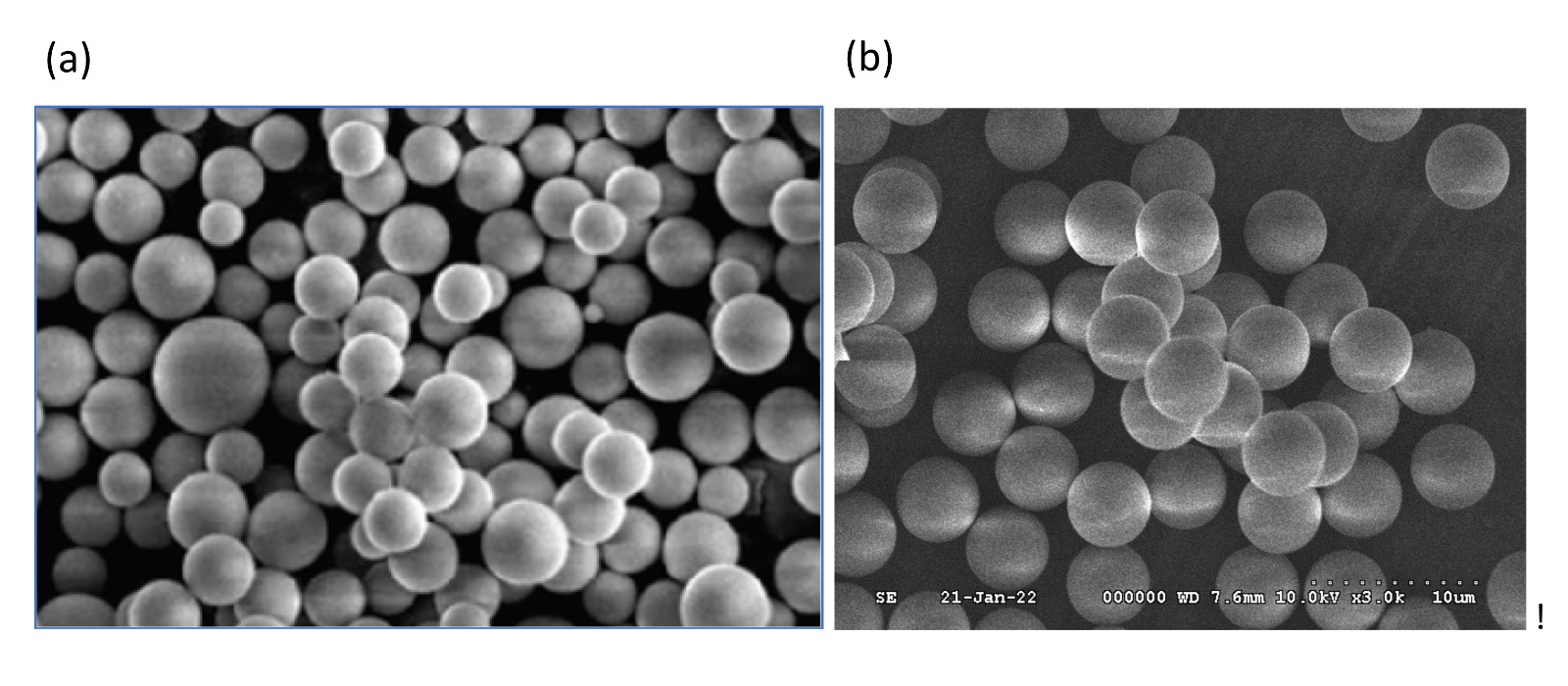
The difference in uniformity between polydisperse and monodisperse particles can be seen in Figure 1. The scanning electron microscopy (SEM) images of traditional HPLC particles and new monodisperse particles visually highlights the uniform size distribution of the new monodisperse particles.
To accurately quantify particle size and distribution, techniques such as electrical zone sensing or laser diffraction are commonly used. To characterize the particle size distribution generated by either of these techniques, the ratio of D90/10 may be applied to gauge the degree of size uniformity of the particles. The parameter D90 signifies the point in the size distribution, up to and including, 90% of the total volume of material in the sample is “contained.” For example; if the D90 is 6 µm, this means that 90% of the sample has size of 6 µm or smaller. The definition for D50 is then the size point below, in which 50% of the material is contained. Similarly, the D10 is the size below, in which 10% of the material is contained. This description has long been used in size distribution measurements. As the particle size distribution for chromatographic silica moves towards monodisperse then the D90 and D10 values become closer together and the D90/10 ratio moves toward a value of 1.
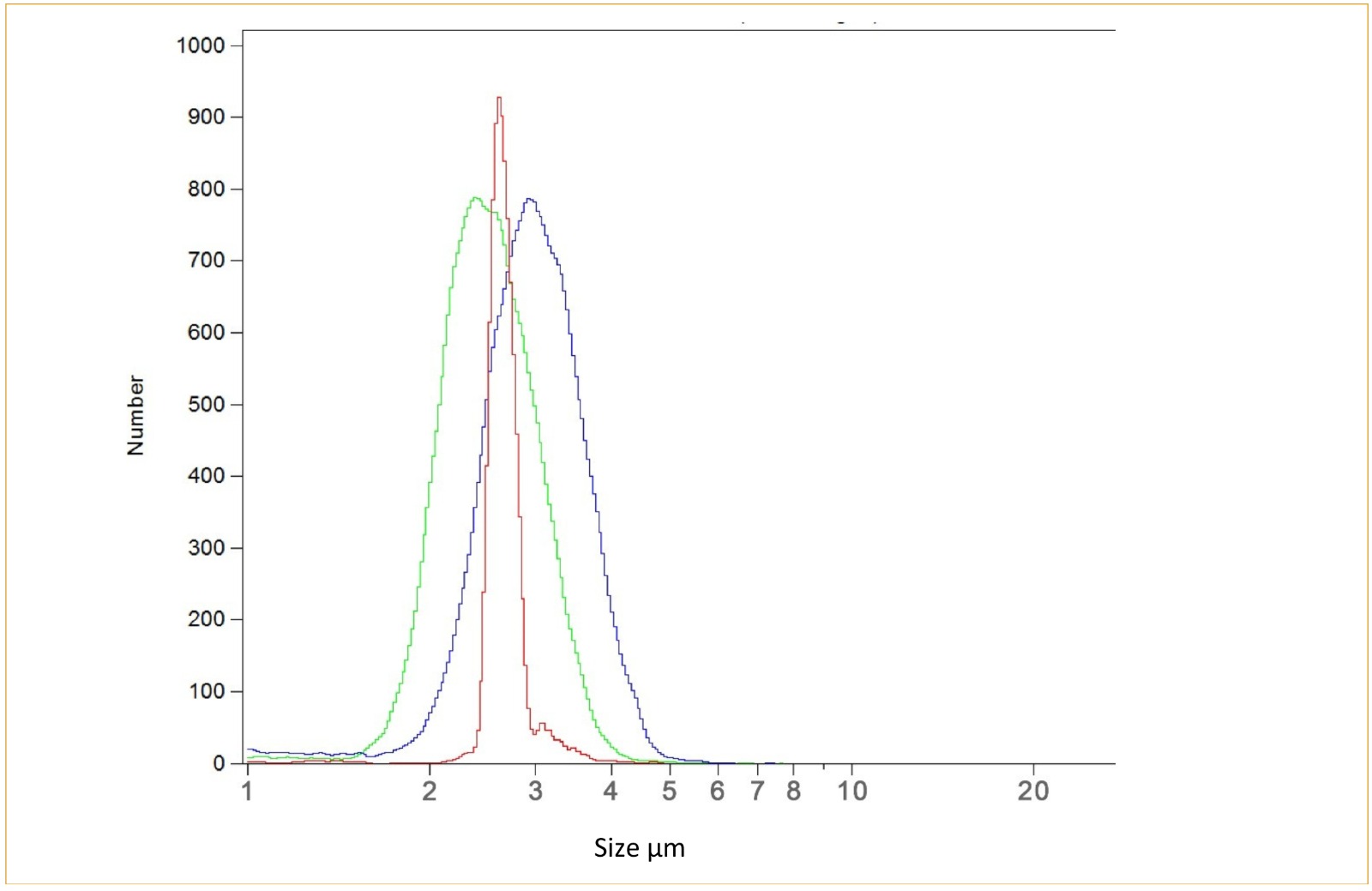
Using a Coulter Multisizer 3 (Beckman Coulter Inc.), an electrical zone sensing instrument, we measured two commercial 3-µm porous silicas and compared against the MFPP. Figure 2 shows the particle distribution of two commercial 3-µm spherical silica samples in comparison with the MFPP. As can be seen, both commercial silicas have a much broader size distribution than the monodisperse material, with one having a slightly smaller mean particle size and the other a slightly larger mean particle size than the 3 µm specified in the manufacturer’s literature.
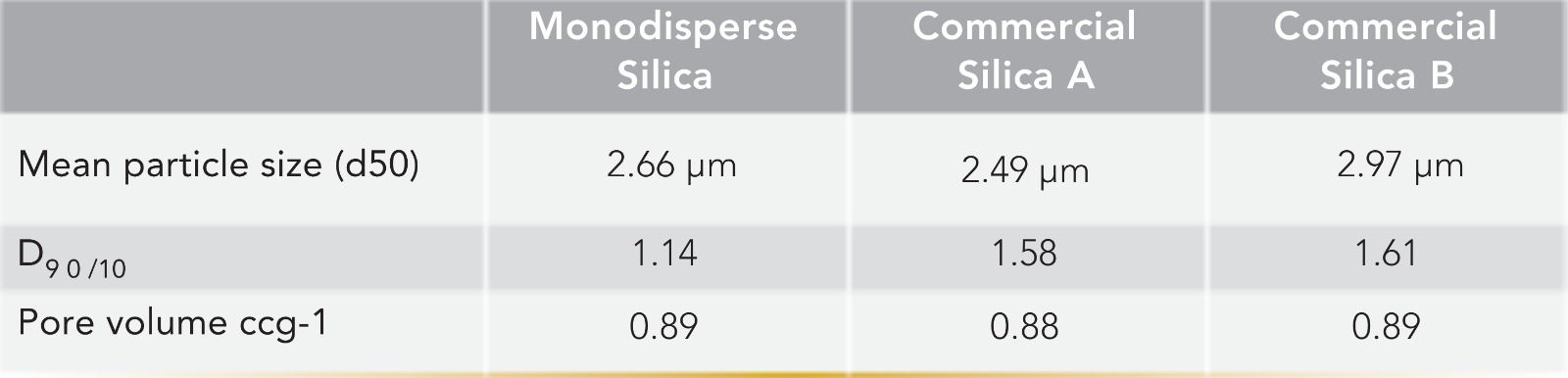
The D90/10 values calculated from the size distribution data can be seen in Table 1, where the traditional particles possess D90/10 values greater than 1.5. In comparison, the new monodisperse particles achieve a D90/10 of 1.1. To this day, commercial silica columns containing particles with these high D90/10 values (>1.5) are being successfully used with an acceptable level of column efficiency for the user. Theoretically, we should now expect these monodisperse particles to improve column performance.
Origin of Efficiency with a MFPP
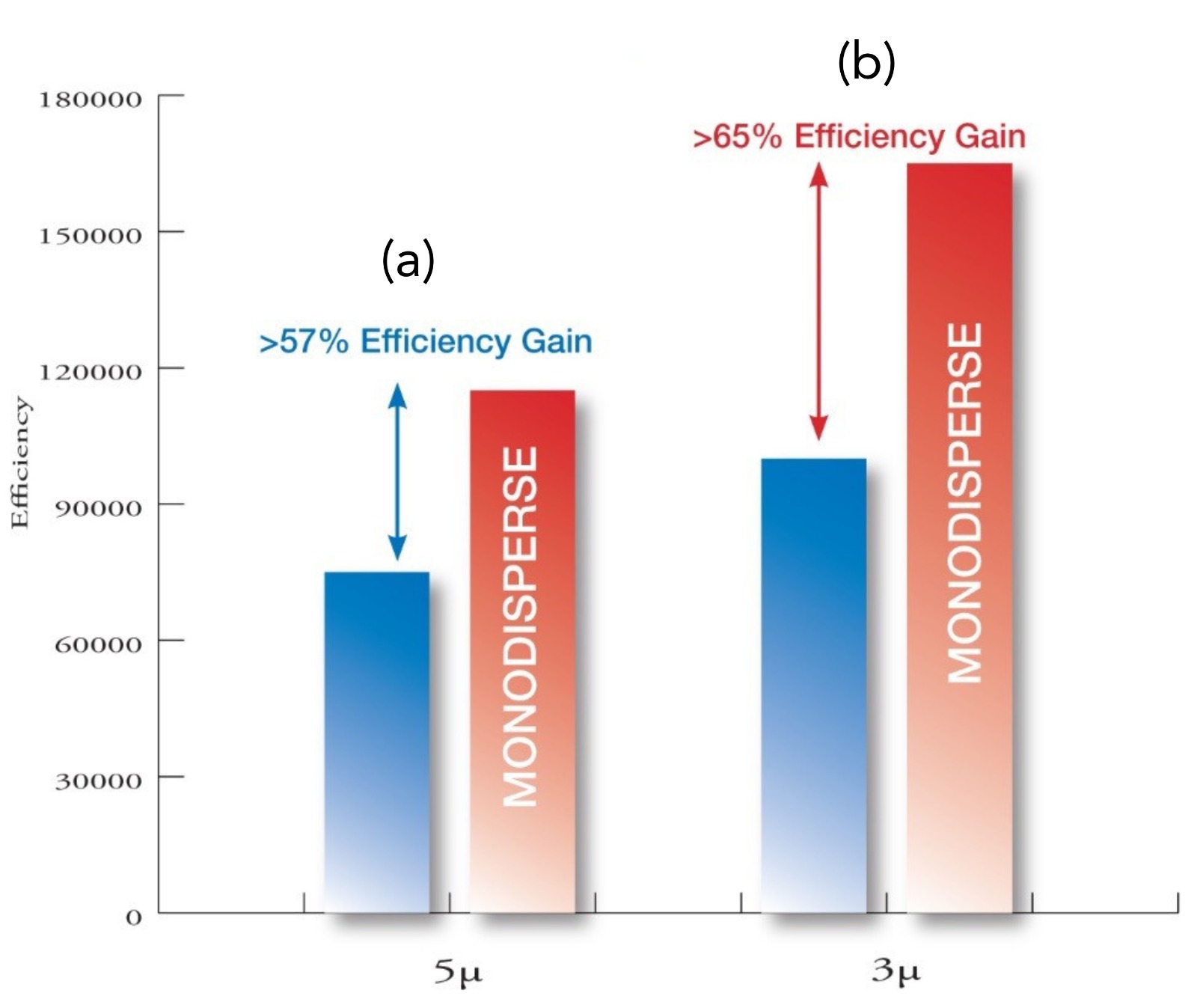
Figure 3 shows a graph of the average column efficiencies obtained for twenty 150 x 4.6 mm columns packed with a 5-µm polydisperse C12 (internal Fortis Technologies bonding) with a D90/10 value of 1.5. An average efficiency of 72,500 plates per meter (p/m) was achieved. A monodisperse 5µm particle exhibiting a D90/10 of 1.1 with identical C12 bonding realized an average efficiency of 114,000 p/m over 20 packed columns of identical dimension. Therefore, a gain in the region of 57% efficiency because of the difference in the monodispersity of the particles was achieved.
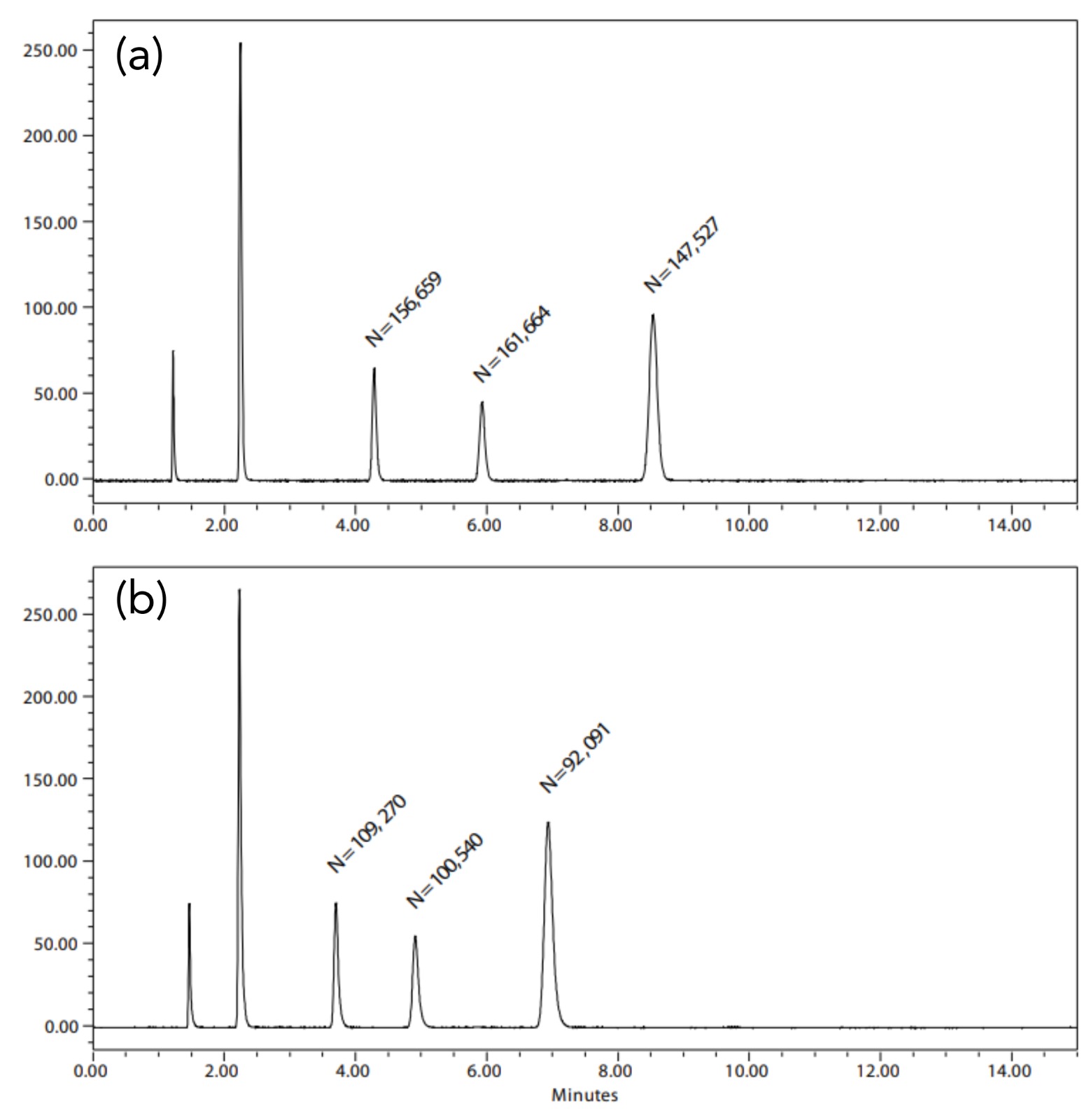
When the experiment was repeated with 20 columns of 3-µm particles, the average efficiency for traditional polydisperse 3-µm particles was 98,000 p/m. Monodisperse particles achieved 165,000 p/m on average. Figure 4 shows a typical chromatogram from each batch of monodisperse and polydisperse columns or packed columns. Using the 3-µm C12 150 x 4.6 mm columns, efficiency is shown to be significantly higher on the monodisperse column, as would be expected. Efficiency is manifested chromatographically as improved resolution and sensitivity. This research will continue to include multiple column diameters (that is, 3 mm and 2.1 mm i.d. columns) to ascertain the contribution from packing and to ensure it is representative across dimensions and is not adversely influenced by increased wall effects or the inherent difficulty in packing narrow bore columns.
So, What Causes This Efficiency Increase Seen in HPLC Columns Packed with Monodisperse Particles?
Assuming the particles are packed under controlled conditions and testing has been optimized (reduced dwell volume of system to a minimum), there will be three main parameters which contribute to lower reduced plate heights (5) (hmin) as defined in the van Deemter equation. The first term, A (Eddy diffusion) is the function of the size and distribution of the interparticle channels or nonuniformities in the packed bed. Secondly, the B term is inversely proportional to linear velocity so describes the molecules diffusion in the axial direction into and out of the pore structure. Finally, the C term which is proportional to linear velocity represents the mass transfer of the molecule from the solvent into the particle stationary phase and back again.
When superficially porous particles (SPP) with narrower particle size distributions came to market (6.7), it was widely assumed that their lower hmin counts were attributed to the narrower PSD, allowing the formation of homogenous packed beds and therefore, a reduced A term, coupled with a smaller impact from the rapid mass transfer of solutes into and out of the reduced porous shell structure. Further studies (8,9) have suggested that longitudinal diffusion into a lower pore volume could be a more significant contributing factor than was initially envisaged. With MFPPs, we should potentially see the same gains from the A term (Eddy diffusion) as SPP particles first imagined. Since both have an almost identical level of monodispersity with D90/10 values around 1.1.
If pore size, pore structure, pore diameter, and mean particle size do not differ between MFPP and traditional porous particles in any significant respect, the flow path around a homogenous well packed column bed will have to be the main contribution to the much-enhanced efficiency seen for MFPP columns. Further study will be required to ascertain the individual contributions.
Effect of Monodispersity on Column Backpressure
By moving to monodisperse high efficiency particles, do we have a positive or detrimental effect on column backpressure?
There is evidence in the literature to suggest that it is difficult to differentiate between the contribution of PSD on the column backpressure as opposed to the impact of column packing process itself. Daneyko (10) suggested column packing was a high contributing factor. Cabooter (11) suggested a small PSD was key. Liekens (12), similar to Dewaele (13), fabricated mixed particle sizes to try and determine the impact of PSD, concluding that while there was no significant drop in hmin when used at optimum linear velocity, at higher elution speeds there was both a drop off in efficiency and also significant increase in backpressure.
Anecdotally, we see in our early evaluations that, although column packing processes impact on the resulting efficiency, there is a clear improvement in column performance when monodisperse particles are compared with polydisperse particles without any discernible increase in backpressure. These new MFPP in various particle sizes will aid in the evaluations since until now narrow PSD was only really available with SPP particles.
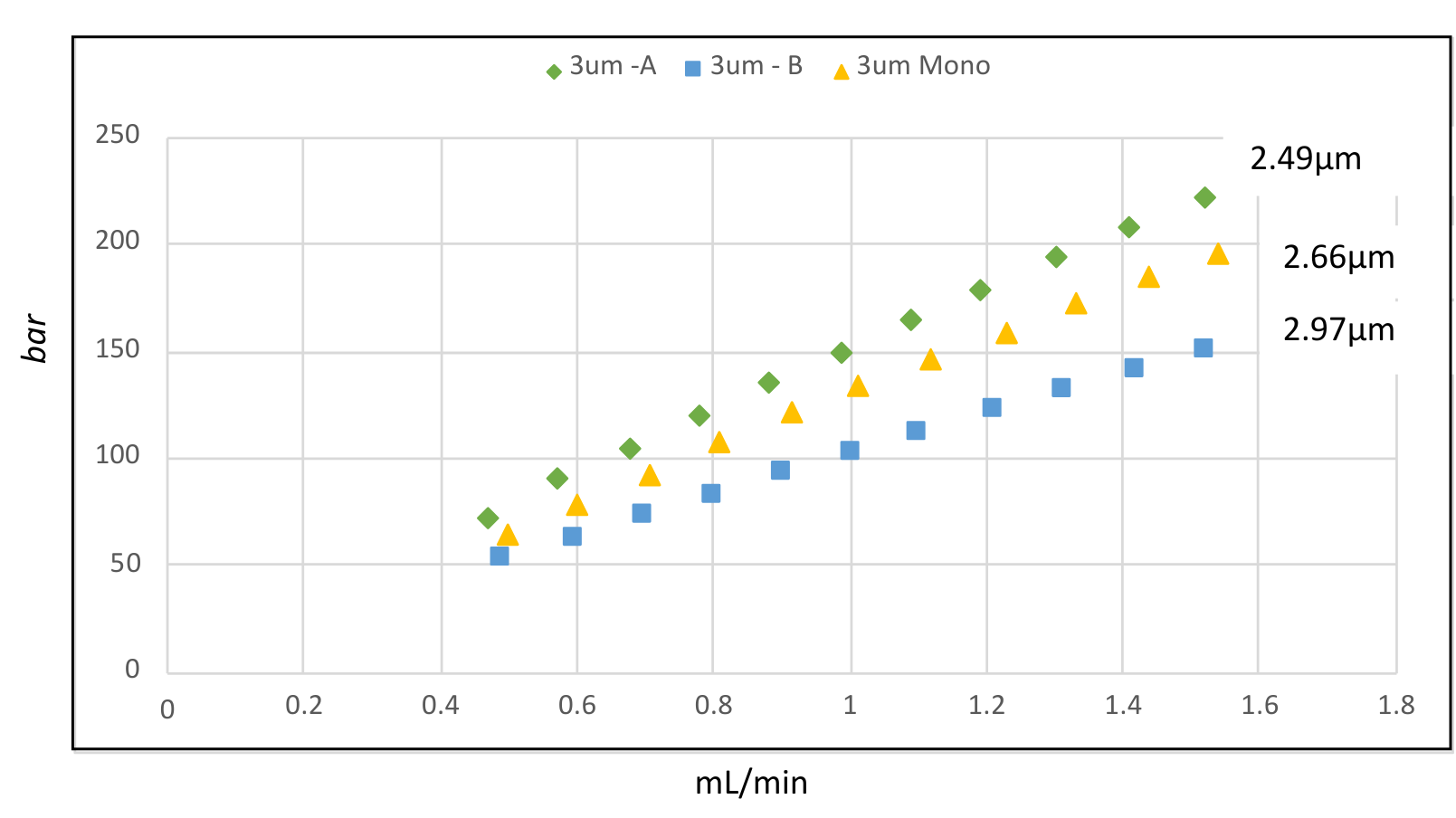
In our laboratory, we studied the column backpressure of commercial silicas, each possessing different PSDs (Table I). This was done by packing each silica under identical pressure and flow conditions, to ensure parameters such as sedimentation rates played no part in the ensuing results. Silicas were selected that possessed the same pore volume and pore diameter. From the results shown in Figure 5, we can see that although the mean particle size affects the backpressure, the degree of monodispersity (D90/10) did not. This would tie in well with the opinions of Dewaele.
Gains in Loading Capacity
Because of the much higher surface area available on the MFPP than the SPP, sample loading can be increased without loss of peak shape, efficiency, and therefore, resolution. Currently, this is where we see limitations in the performance of SPP particles.
The monodisperse particles studied in this article have a surface area of 350 m²/g thereby offering higher retention as well as increased loading capacity. When peak overload occurs, critical separations, such as a parent peak and its impurities, become compromised and the loading capacity is significantly reduced potentially up to a 10-fold difference.
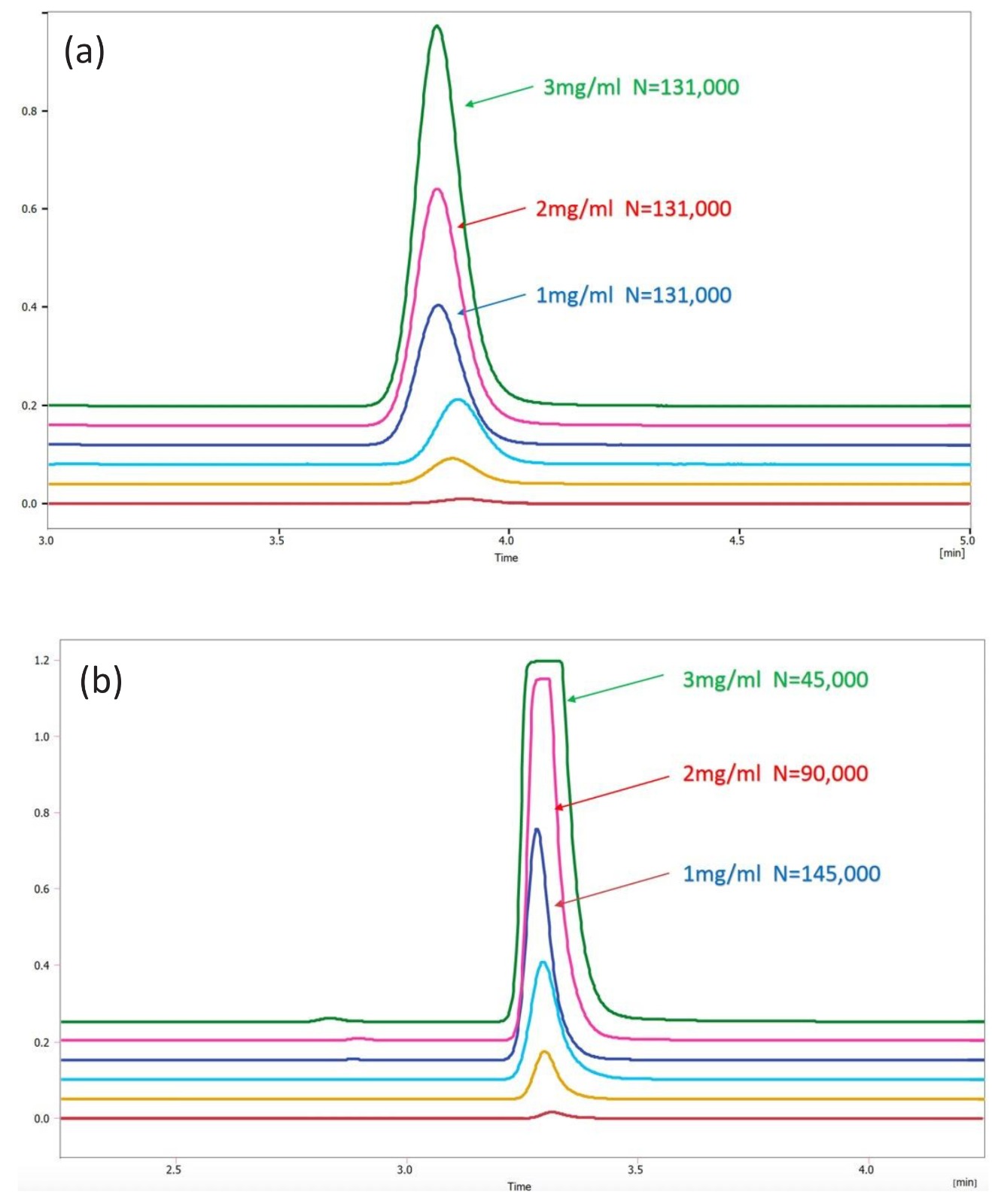
A loading study was performed, for both SPP and MFPP, by steadily increasing the mass of sample that was injected onto the respective column (Figure 6). It can clearly be seen how efficiency drops rapidly as overload quickly occurs on SPP particles. The importance of this issue is significant when considering the development of analytical methods for any new molecular entity (NMEs) that will ultimately require purification once they move to a manufacturing process. The ability to move from a UHPLC sub-2-µm particle in initial method development to a 5-µm or 10-µm FPP in a production environment relies on the ability to have a scalable particle at a non-prohibitive cost that is available in multiple column diameters. Because of the processing costs involved in the manufacture of SPP materials, they are often not commercially available in larger preparative column dimensions, and those that are can be prohibitively expensive. By contrast, these new MFPP materials are produced by conventional manufacturing methods at no more expense than the current commercial silicas. Therefore, they can be supplied in all preparative column formats at a cost affordable to most production sites requiring this type of chromatography.
Is Efficiency Enough?
The primary goal of HPLC is the separation of one or more analytes within a mixture. Focusing on increasing efficiency alone is analogous to overcoming only part of the challenge posed by separation science.
Selectivity is an often-overlooked concept as the majority of analysts will start method development with the selection of a C18 stationary phase running a simple aqueous: organic mobile phase. Although this approach is great for simplicity and with a relatively high percentage success rate, it does not always allow for the separation of complex samples or closely related species. The separation challenges that lie ahead include isomers and molecules with near identical structural properties as well as complex samples from, for example, biological sources. These challenges require the resolving power of stationary phase selectivity.
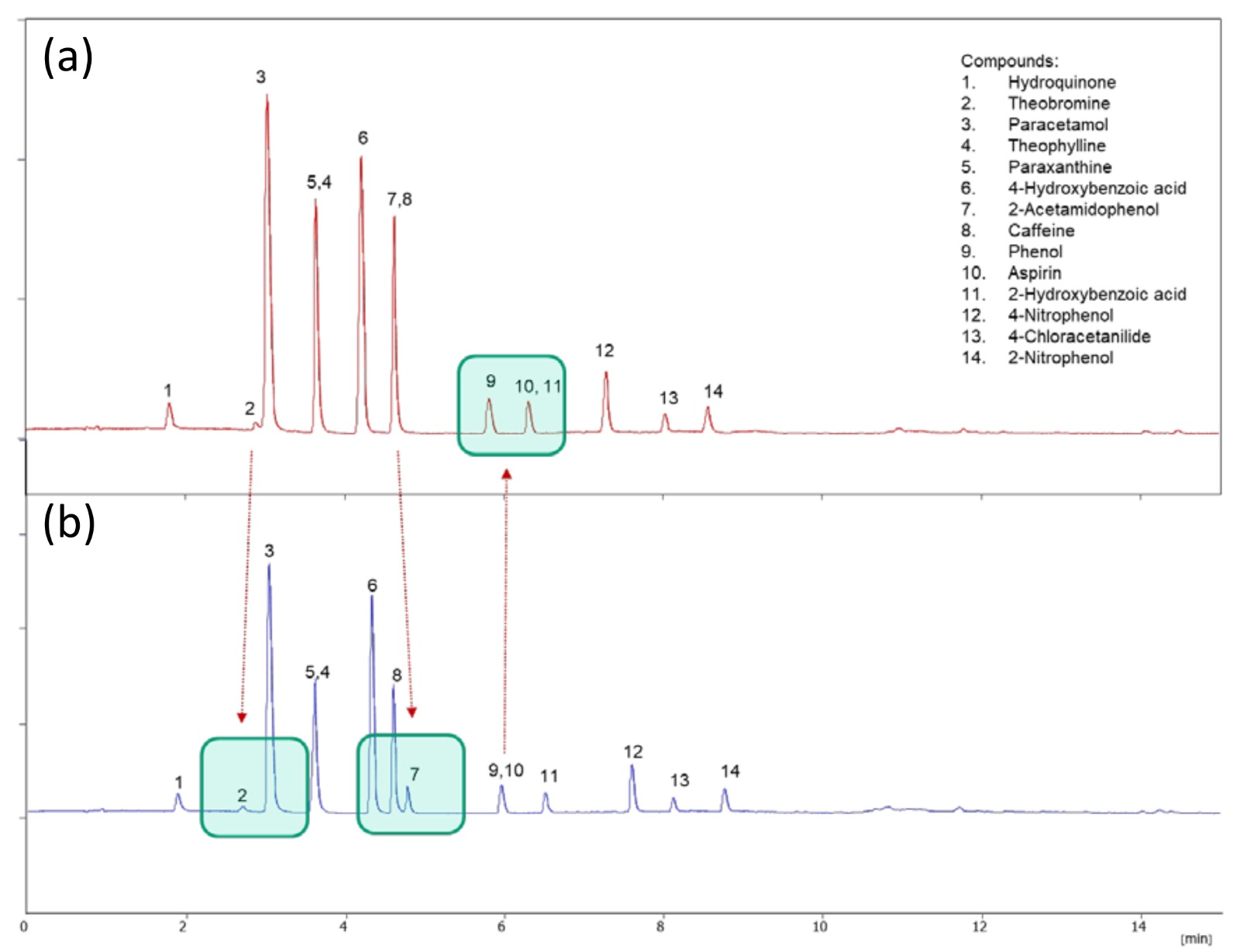
If we can expand on the traditional stationary phase characteristics by introducing not just alkyl chain hydrophobicity (that is, C18 and C8), but by their halogenated, aromatic, or polar character, then these secondary mechanisms will promote greater analyte-stationary phase engagement. Figure 7 shows the separation of a diverse mixture of compounds on two, predominantly C18 alkyl chain phases, however one has aromatic secondary character and one has pentafluorophenyl (PFP) secondary character. It can be clearly seen that in some areas of the chromatogram the phases appear to be quite similar in selectivity, whereas with some of the components there are large shifts in resolution between analyte pairs. This is the type of movement that can then be tuned for the NME and its impurities in initial method development screening.
Further surface modifications produced by manufacturers to offer enhanced selectivity are far too numerous for the scope of this article and have been characterized in multiple ways, such as the Tanaka (14) protocol, Engelhardt (15) test or the Synder, Dolan (16) hydrophobic-subtraction model. The reader should take some time to review as much of this work as possible as it offers a good insight into the diversity available in stationary phase design over the years along with many good examples of application development to solve challenging separations.
The more selectivity that can be imparted from the stationary phase the less demand there is to manipulate the mobile phase, temperature or pH range. Changes in the organic mobile phase component seem to have become somewhat limited in RP chromatography because of miscibility, safety, cost, and environmental impact of solvents. Fully porous monodisperse particles available with a wide range of orthogonal stationary phases will therefore allow the separation scientist to optimize selectivity and speed of analysis without the need for exhaustive method development or pushing the extremes of pH, additives or solvent mixtures.
This simplification leads to more robust, reproducible methods which is a productivity gain within our development process.
Conclusion
There have been many developments in particle technology over the years aimed to improve performance, resulting in chromatography with increased speed, efficiency, and sensitivity. However, these changes always appeared to provide a benefit at the expense of another parameter, whether that be the high backpressure trade-off for the efficiency gain in UHPLC, or the limited sample loading and cost trade-off made for the efficiency gain seen with SPP particles. With the development of a monodisperse fully porous particle (MFPP) there is now a commercially available silica support that brings performance benefits without associated drawbacks.
MFPP particles have now been optimized to a degree where commercialization has been achieved. Improving the particle morphology has led to gains in efficiency over existing porous particles in the region of 50–60%, giving greater sensitivity and resolution. These gains are attributed to the reduced A-term as a result of the better flow path through the interstitial spaces in the packed column bed.
Our studies show when comparing equivalent 3-μm monodisperse packed beds and polydisperse packed beds, we see no discernible backpressure differences that could be attributed to the improved monodispersity. By increasing monodispersity, we have in effect simultaneously eliminated both small and large particles, and their respective contributions to increasing and decreasing backpressure are therefore canceled out. Hence, we see no net increase in backpressure.
By maintaining a fully porous structure in these monodisperse particles, we show the high surface area leads to high sample loading capacity. Our loading studies showed a >4-fold increase in capacity on a simple pharmaceutical molecule when comparing to a high efficiency core-shell particle.
We acknowledge how even with the enhanced efficiency of a monodisperse particle, a choice of orthogonal stationary phases is critical to the more complex samples faced in the current pharmaceutical and biomolecule workflow. This topic will be covered in further articles.
Further study of these monodisperse particles will revolve around additional comparison with SPP, trying to understand all of the contributions leading to the source of the efficiency gains. Assuming the A-term, particle size, and packing density are similar with both, what is the difference between C-terms? Also, can you compartmentalize the column packing process impact from the particle architecture contributions?
In summary, MFPP offers high efficiency, high surface area with homogeneous well-packed column beds for analytical through to preparative scale chromatography. Method development and method transfer can move seamlessly from initial UHPLC through to preparative scale production environment. In particular, 3-μm MFPP particles have been shown to offer gains in efficiency similar to UHPLC particles without a trade-off in increased backpressure or loading capacity.
Further study of these monodisperse particles will revolve around additional comparison with SPP, trying to understand all of the contributions leading to the source of the efficiency gains. Assuming the A-term, particle size, and packing density are similar with both, what is the difference between C-terms? Also, can you compartmentalize the column packing process impact from the particle architecture contributions?
In summary, MFPP offers high efficiency, high surface area with homogeneous well-packed column beds for analytical through to preparative scale chromatography. Method development and method transfer can move seamlessly from initial UHPLC through to preparative scale production environment. In particular, 3-μm MFPP particles have been shown to offer gains in efficiency similar to UHPLC particles without a trade-off in increased backpressure or loading capacity.

Wonderful website. Plenty of helpful info here. I am sending it
to some pals ans additionally sharing in delicious. And obviously, thanks to your effort!
Hi! I’ve been reading your weblog for a while now and finally got the
courage to go ahead and give you a shout out
from Kingwood Tx! Just wanted to mention keep up the good job!
I am curious to find out what blog system you happen to be working with?
I’m experiencing some minor security problems
with my latest blog and I would like to find something more risk-free.
Do you have any solutions?
Howdy! I know this is kind of off topic but
I was wondering if you knew where I could get a captcha plugin for
my comment form? I’m using the same blog platform as yours
and I’m having problems finding one? Thanks a lot!
When someone writes an post he/she keeps the image of a user in his/her mind that how a user can be aware of it.
Therefore that’s why this post is amazing. Thanks!
Wow, this article is fastidious, my younger sister is analyzing these
things, thus I am going to inform her.
Wow, superb weblog structure! How lengthy have you ever been blogging for?
you made running a blog glance easy. The entire glance of your website is magnificent, let alone the content!
Do you mind if I quote a couple of your posts as long as I provide credit and sources back to your weblog?
My blog is in the very same area of interest as yours
and my users would definitely benefit from a lot of the information you present here.
Please let me know if this alright with you.
Appreciate it!
Heya! I’m at work surfing around your blog from my
new iphone! Just wanted to say I love reading through your blog and look forward to all your posts!
Carry on the superb work!
Pretty! This was an extremely wonderful article.
Thanks for supplying this info.
Link exchange is nothing else however it is simply placing the other person’s web site link on your page at suitable place and
other person will also do same in favor of you.
hey there and thank you for your information – I have definitely
picked up anything new from right here. I did however
expertise some technical issues using this web site,
as I experienced to reload the website many times previous
to I could get it to load properly. I had been wondering if your hosting is OK?
Not that I’m complaining, but slow loading instances times will very frequently affect your placement in google and could damage your quality score
if ads and marketing with Adwords. Well I’m adding this RSS
to my e-mail and can look out for much more of your respective exciting content.
Ensure that you update this again soon.
Everything is very open with a clear explanation of the challenges.
It was truly informative. Your website is useful.
Many thanks for sharing!
An impressive share! I have just forwarded this onto
a co-worker who was doing a little homework on this.
And he in fact bought me lunch because I found it for him…
lol. So let me reword this…. Thank YOU for the meal!!
But yeah, thanks for spending the time to talk about
this subject here on your blog.
現代日本は、高度な技術において世界的に有名されています。特に、自動車産業では、トヨタなどの大手企業が世界市場をリードしており、新車やハイブリッド車など、さまざまな革新技術が普及しています。自動車産業の進展により、環境への配慮が大きく向上し、ドライバーにとってより良い選択肢が提供されています。
車の所有は、車両保険といった日本特有の制度に密接に関連しており、日本の運転者は、これらの制度に従い、交通安全を確保しています。さらに、ドライブレコーダーの普及が進んでおり、事故やトラブルの際に迅速に対応できるようになっています。これにより、日本国内では、信頼性が提供され、社会的責任の問題にも積極的に取り組んでいます。
一方で、少子高齢化という深刻な問題が日本において進行しています。高齢者の増加に伴い、介護分野での需要が急増し、介護士の不足が深刻な問題となっています。このため、看護師求人が増加しており、さらに介護職の再教育の需要も高まっています。政府は、新しい介護システムを活用した支援策を導入し、高齢者への支援を強化しています。
また、健康の分野では、治療法が急速に進化し、疾病に対する対応が向上しています。日本は、治療の最前線を提供し、特に心臓病治療において多くの革新が導入されています。さらに、看護師の専門性を高めるため、医療研修が重要視され、専門知識の充実が求められています。
社会的な課題に対して、日本の社会貢献活動は積極的に取り組んでおり、福祉活動を推進しています。これにより、地域住民や障害者に対する支援が強化され、ボランティア活動が日常的に行われています。災害支援活動も重要な役割を果たしており、特に日本では、台風などの自然災害時に、ボランティアが迅速に対応し、物資提供が行われています。
さらに、情報技術が進展する中で、eスポーツなどの新たな娯楽の形態が広がり、健康管理への関心が高まっています。日本では、フィットネスクラブの利用が増加し、健康維持に向けたライフスタイルが注目されています。また、サプリメントが重要な役割を果たし、ダイエットのためのアイテムが多く流通しています。
ファッションや美容においても、日本の消費者は、常に新しいトレンドを追い求めています。衣類においては、ファッションデザイナーが注目され、特にフォーマルスタイルが人気です。美容業界では、メイクが進化し、脱毛などのサービスも充実しています。ネイルアートやジェルネイルもトレンドとなり、ネイルデザインが活況を呈しています。
このように、日本社会は、進展とともに進化しており、社会福祉が密接に関わり合っています。未来に向けて、持続可能な社会の実現に向けた取り組みが進んでおり、これらの挑戦を乗り越えるための準備が整いつつあります。
My brother suggested I would possibly like this web site.
He was once totally right. This post truly made my day.
You cann’t consider just how a lot time I had spent for this information! Thanks!
Thank you for the good writeup. It in fact was a amusement
account it. Look advanced to more added agreeable from you!
By the way, how could we communicate?
I’ve been browsing online more than three hours today, yet
I never found any interesting article like yours. It’s pretty worth enough for me.
Personally, if all webmasters and bloggers made good content as you did, the net will be a lot more useful than ever before.
you are really a good webmaster. The web site loading speed is amazing.
It kind of feels that you are doing any unique trick. In addition, The contents are masterwork.
you have done a wonderful task on this subject!
Hi there to every one, because I am actually keen of reading this webpage’s post to be updated
regularly. It includes pleasant stuff.
Hey There. I discovered your blog the use of msn. This is a
very smartly written article. I’ll make sure
to bookmark it and return to read more of your helpful information. Thanks for
the post. I will definitely comeback.
It’s a shame you don’t have a donate button! I’d without a doubt donate
to this brilliant blog! I guess for now i’ll settle for book-marking and adding your RSS feed to my Google account.
I look forward to fresh updates and will share this blog with my
Facebook group. Chat soon!
Simply wish to say your article is as astounding.
The clearness in your post is just excellent and i
could assume you’re an expert on this subject.
Fine with your permission let me to grab your RSS feed to keep updated with forthcoming post.
Thanks a million and please keep up the gratifying work.
As the admin of this website is working, no question very quickly it will be famous, due to its quality contents.
Do you mind if I quote a couple of your articles as long as I
provide credit and sources back to your website?
My blog is in the exact same niche as yours and my visitors would genuinely benefit from some of the information you present here.
Please let me know if this ok with you. Many thanks!
日本は、最先端のテクノロジーにおいて世界的に有名されています。特に、自動車産業では、日産などの大手企業が世界市場をリードしており、新車やハイブリッド車など、さまざまな環境に配慮した技術が普及しています。自動車産業の進展により、環境への配慮が大きく向上し、ドライバーにとってより良い選択肢が提供されています。
車の所有は、自動車税といった日本特有の制度に密接に関連しており、日本のドライバーは、これらの制度に従い、交通安全を確保しています。さらに、ドライブレコーダーの普及が進んでおり、事故やトラブルの際に迅速に対応できるようになっています。これにより、日本全土では、安心感が提供され、安全運転の問題にも積極的に取り組んでいます。
一方で、高齢化社会という重要な問題が日本において進行しています。高齢者の増加に伴い、介護分野での需要が急増し、看護師の不足が深刻な問題となっています。このため、看護師求人が増加しており、さらに医療従事者のキャリア支援の需要も高まっています。政府は、AI技術を活用した支援策を導入し、障害者への支援を強化しています。
また、福祉の分野では、治療法が急速に進化し、ケガに対する対応が向上しています。日本は、高い医療水準を提供し、特に高齢者医療において多くの革新が導入されています。さらに、医療従事者の専門性を高めるため、医療資格取得が重要視され、専門知識の充実が求められています。
社会的な課題に対して、日本の社会貢献活動は積極的に取り組んでおり、福祉活動を推進しています。これにより、地域住民や障害者に対する支援が強化され、ボランティア活動が日常的に行われています。福祉活動も重要な役割を果たしており、特に日本では、震災などの自然災害時に、地域住民が迅速に対応し、支援活動が行われています。
さらに、テクノロジーが進展する中で、eスポーツなどの新たな娯楽の形態が広がり、フィットネスへの関心が高まっています。日本では、家庭用トレーニングの利用が増加し、体力向上に向けたライフスタイルが注目されています。また、栄養管理が重要な役割を果たし、健康的な食生活のためのアイテムが多く流通しています。
ファッションや美容においても、日本の消費者は、常に新しいトレンドを追い求めています。衣類においては、トレンドアイテムが注目され、特にカジュアルファッションが人気です。美容業界では、スキンケアが進化し、エステなどのサービスも充実しています。ネイルアートやジェルネイルもトレンドとなり、ネイルスクールが活況を呈しています。
このように、日本社会は、課題とともに進化しており、社会福祉が密接に関わり合っています。未来に向けて、新しいライフスタイルの実現に向けた取り組みが進んでおり、これらの挑戦を乗り越えるための準備が整いつつあります。
Hello! This is kind of off topic but I need some help from an established blog.
Is it difficult to set up your own blog? I’m not very techincal but I can figure
things out pretty fast. I’m thinking about creating my
own but I’m not sure where to begin. Do you
have any tips or suggestions? Thanks
Fine way of explaining, and fastidious paragraph to get facts concerning my presentation focus, which i am going to
deliver in academy.
Simply desire to say your article is as surprising. The clarity in your post is simply excellent and i could
assume you’re an expert on this subject. Fine with your permission let me to grab your feed to
keep updated with forthcoming post. Thanks a million and please
continue the gratifying work.