

Portfolio Manager as Orchestra Conductor
In a generic pharma company, the portfolio manager is not just “the holder of the Excel.” You are the orchestra conductor for new product decisions. You keep everyone in sync and in line and you challenge, challenge, challenge!
A conductor doesn’t just set the
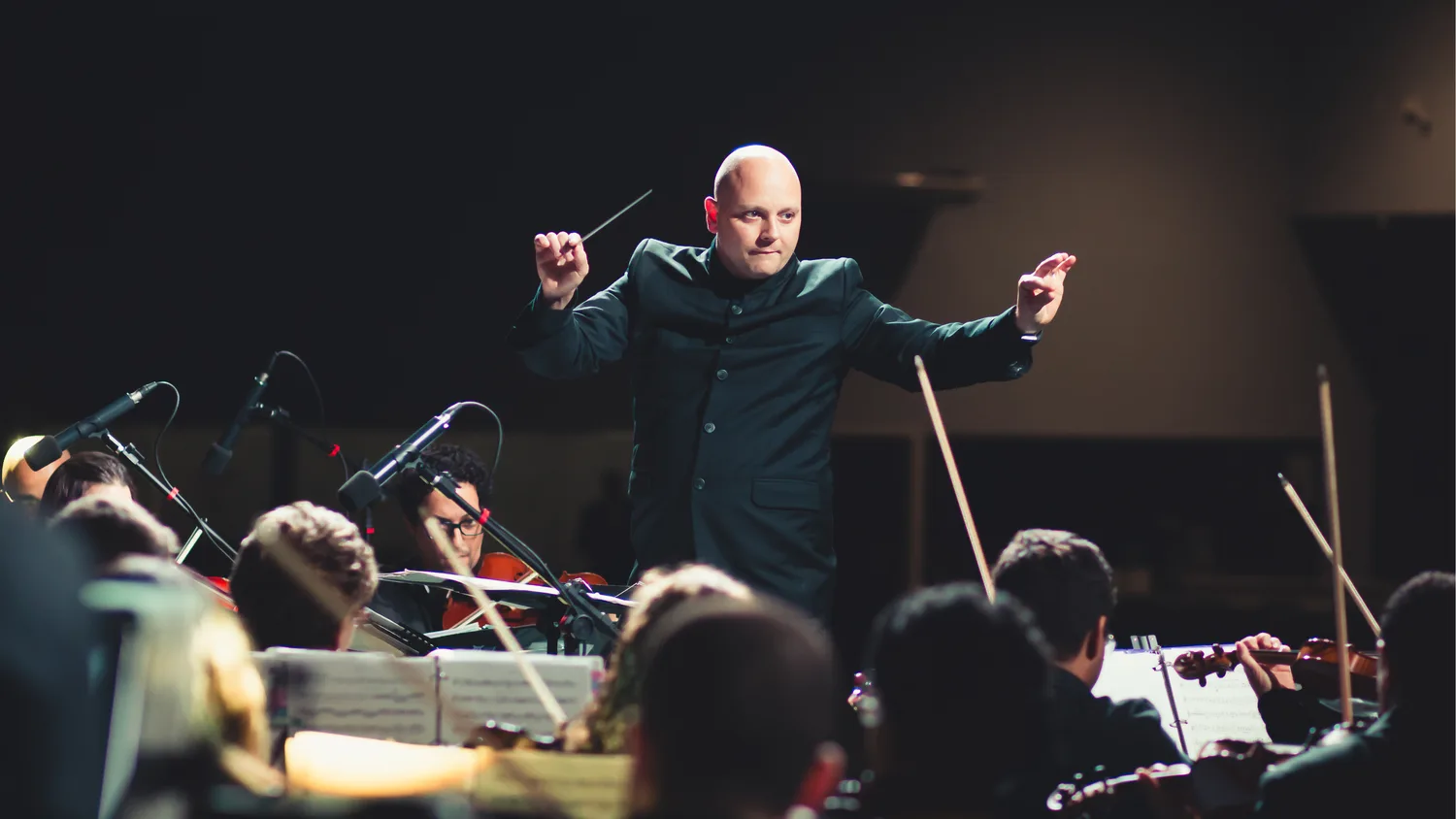
tempo and hope for the best. They:
- Make sure each section is in sync with the others – strings with winds, brass with percussion.
- Balance volume and emphasis so no section drowns out the rest.
- Shape the overall interpretation so it sounds like four‑part harmony, not four boy bands rehearsing in their garages.
That’s exactly what a good portfolio manager does.
Taking responsibility for the rhythm is necessary but not sufficient. Not only how often we review the funnel but with whom? Not only when we make decisions, but how? Making sure that we revisit those decisions objectively and with all of the right inputs. There is no room for emotion.
You also own the harmony, the outcomes:
- The number and value of project candidates we approve and ensuring there are no gaps in the revenue stream
- Alignment between corporate growth objectives and the fit with real resources and budget, not the imaginary ones we sometimes wish we had. If they don’t align, raise a red flag.
- There is no excuse for missing the target. LoE dates don’t move because of internal reorganization or a development snafu. You own this and are accountable for keeping on focus and for managing risks.
The Right‑Sized Ensemble: Everyone Critical, No One Extra
When I say “parachute out of the tower and into the noise,” I don’t mean invite half the company to a nine‑hour meeting (yes, I’ve been there too!)

You don’t need a stadium; you need a tight ensemble of people whose input genuinely impacts the decision:
- Sales & Marketing / Commercial – Do not try to do this without the person who faces the market every single day. They bring the external reality: customer needs, payer behavior, tender dynamics, realistic price and volume scenarios (yes, you will have to challenge them to get this!). Without them, your NPV is built on personal fantasy.
- R&D / Technical – Essential for translating opportunities into actual work: technology fit, development complexity, cost, probability of success, (did I already mention challenge?) and which projects demand equipment and skills you don’t yet have.
- IP / Legal – True savants who look past the common wisdom LoE and deep dive into formulation, polymorph, salt/ester, device, and process patents. They help answer: What are the barriers, which can be overcome and when can we really launch? Where are the real risks and what are the consequences?
- Clinical / Biopharm – Experts who bring bioequivalence complexity and cost into the picture. Is this a straightforward 2-way crossover PK study, or a multi‑study, high‑risk highly expensive beast?
- Project / Resource Management – They hold the uncomfortable mirror: “Here’s what we can actually do with the people and budget we have. If we add this, something else slips.”
Your job is to keep this group small but complete. If someone in the room isn’t providing essential information or owning part of the decision, they probably shouldn’t be in that session.
Once you have the right ensemble, the question becomes: how often do you play together, and what do you talk about?
From “Fire and Forget” to Ongoing Conversation
Let me confess a mistake of my own.
At one point in my career, the Sales & Marketing team sat me down and said, “We don’t have visibility. We support your process, advocate for new product candidates, and provide input, and then it feels like you disappear. It’s ‘fire and forget’ from our side – we hear almost nothing until you show up with a launch date and a revenue target.”
I was stunned! I thought that I was providing complete visibility by copying on emails and providing dashboards, but they were right! Even the best systems and tools do not take the place of proper communication. In their view I was running a one‑shot decision process and then retreating back into my tower.
So we changed it.
We set up three portfolio updates per year. Not giant conferences but focused sessions of an hour or two at most, addressing each product in the pipeline with participants changing according to need:
- Sales & Marketing brought external market updates: price moves, new competitors, changing customer needs and forecasts.
- R&D shared internal progress and risk: what was working, what wasn’t, and what had changed in complexity or cost.
- Project Management walked through projected timelines and associated risks.
- IP, RA, and Clinical weighed in when their world shifted.
- And every time, we asked the simple, brutal question:
“Given what we know today, does this project still make sense?”
Another improvement we added was getting commercial to approve trade dress early in the development process. After one painful episode of “Why on earth did you make the tablet blue? My market can only sell yellow,” we added an explicit step: S&M approves the size-color-shape-imprinting before we locked it in. One step up in creating joint commitment and project ownership and one less chance for disappointment at launch.
Was it perfect? No. Did it dramatically reduce the “fire and forget” feeling and increase shared ownership? Yes. Further, this improved relationship was key to our success of launching 80% of products as planned! Not too bad.
That’s governance as ongoing conversation, not a single heroic decision that everyone quietly forgets.
Challenge Everyone – Including Your Friends
Getting out of the ivory tower also means being willing to challenge the people you like working with and even yourself.

A few patterns that show up repeatedly and require challenge:
- Low commercial forecasts (aka under‑commit and over‑perform)
- If the revenue assumptions are too low, even valuable projects will never cross your NPV/ROI thresholds killing them on paper before they ever get to the lab.
- Deficient launch forecast guarantees low sales. A realistic forecast allows the plant to be prepared to support commercial success. “Is this really your best view, or just your safest?”
Sandbagging is sabotage at both ends of the process.
- Over‑stating risk and complexity
Risk inflation, even when done subconsciously blocks valuable opportunities because projects sound riskier than they really are. Someone has to put a spotlight on that dynamic and that someone is you! But, be fair! Compensate by working with the project team on a realistic risk mitigation plan and include it in the project budget. - CXOs with big targets and small budgets
At the top, objectives can be wonderfully ambitious. Do available resources mirror the demands of the portfolio required to support this appetite? You’re not being disloyal when you say, “With this budget and these people, that target is not realistic. Wishful thinking is not a plan. You’re protecting the company from believing its own PowerPoints.
Being a portfolio manager is not about being the nicest person in the room. It’s about being honest in a constructive way, so the whole organization can make better choices.
Killing Projects Early, On Purpose
Finally, the part many organizations still struggle with is project cancellation, and the earlier the better!
The behavioral traps are familiar:
- “If we kill these projects, my completion metrics tank.”
- “We’ve already spent $2 million – we can’t just walk away.”
- “This is my pet molecule; it has to succeed.”
Portfolio decisions are always forward‑looking. The only question that matters is:
“Given what we know now about timing, competition, pricing, and risk, is the future investment required still justified by the future value?”
You might realize that to get to market, you still need $8 million in development and pre-launch costs, but the price has eroded, competitors will be there first, and your window is shrinking. Consider the opportunity cost – if the updated financial modeling doesn’t beat other ways to spend that $8 million and utilize those people, the rational move is to stop. It is also our responsibility to the organization and shareholders.
Killing a project early is not admitting defeat. It’s choosing not to throw good money, and good talent, after a now‑mediocre opportunity – and freeing capacity for those bread‑and‑butter products and high‑reward bets that really can deliver.
As portfolio managers, we need to model that behavior calmly and consistently even when it’s uncomfortable. Especially when it’s uncomfortable.
Taking the First Step Off the Tower

I learned the hard way that “Big‑bang Governance Designs” tend to stun people into inaction rather than spur people into action. Small, evolutionary steps land better.
None of this requires a grand transformation on day one. Even baby steps, when taken day by day can add up to important impact and help the organization through evolution instead of revolution. It is not “all or nothing.”
Here are just two examples you might start with:
- Rebuilding the Portfolio Review Meeting
Bifurcate a big meeting into two or more smaller meetings each focusing on a different technology platform or stage of development. Excuse participants who don’t impact on decision making
- Start challenging: Honestly, deliberately and constructively:
“Does it make sense to add another high-risk project at this time? Do we have the budget and resources to mitigate the anticipated risks? What will we cut in its place?
Over time, such actions and behaviors add up to holistic governance – the kind where common-sense, analytics, stakeholder input, risk appetite, and courage all align.
Now, pick up that baton, walk into the orchestra pit, and start making sure the sections and the repertoire are all harmoniously in sync today.
There are many more examples which I look forward to discussing at our upcoming meeting in Goa! Bring me your own challenges!
Great article with MANY things that resonate for me and my organization. We have been on a journey to retool our portfolio strategy and governance and I am pleased many of the changes are reflected in your observations here. I believe one key (to future success) is being adaptable to further changes. Do not assume any retooling is perfect and to continue to challenge ourselves to do better, think smarter and act with purpose!
Hola! I’ve been reading your web site for a while now and finally got the bravery to go ahead and give you a shout out from Kingwood Tx! Just wanted to tell you keep up the fantastic job!
Greetings! Very useful advice in this particular post! It’s the little changes that will make the greatest changes. Many thanks for sharing!
Wow, this post is good, my younger sister is analyzing such things, thus I am going to tell her.
Just browse through our categories and provides quirky and unique gifts to your family!
I’ll right away grab your rss as I can not find your email subscription hyperlink or newsletter service. Do you have any? Please allow me realize so that I may just subscribe. Thanks.
I saw a lot of website but I think this one has got something extra in it.
Ahaa, its pleasant dialogue concerning this piece of writing here at this weblog, I have read all that, so at this time me also commenting here.
There is definately a great deal to learn about this topic. I love all the points you’ve made.
May twenty sixth: A message from ROBLOX was sent to each player, informing them that private servers can be discontinued quickly.
Ahaa, its pleasant conversation regarding this article at this place at this website, I have read all that, so at this time me also commenting at this place.